Comics have many enemies.
Water, humidity, sunlight, bugs and grubby little hands that wrinkle, bend and muck up the pages. Some readers tear out poster pages from them. And others cut out the Marvel Value Stamps that were included in its comics between 1974 and ’76.
All of that reduces the collectability and value of comic books. Nevertheless, there is demand among collectors for specific individual comic pages from key issues and incomplete key issues that are missing a chunk, or a page or two.
First, a bit of background here: It’s important to care for the books, especially older books, which are susceptible to the environment. The first comics were printed on the cheapest newsprint available. During prohibition, the paper was sometimes a cover for a booze shipment from Canada.
Bagging and boarding them is the minimum level of protection to prevent degradation. There are higher-grade bags, such as Mylites and Mylar, archival acid-free boards, and acid-free sheets to insert between pages, which offer the best protection.
Another option includes the encapsulating and grading of books, commonly known as slabbing. A third-party appraiser grades the book on a scale of 10 and then places it in a sealed plastic sleeve. It is a potentially costly and time-consuming process.
Before slabbing, damaged books were treated as trash or as a reader’s copy, to be handled without the care or reverence they deserve.
That’s changed in some cases, though.
There’s a market for partial books and single pages, but it is very specific to key books or key eras, such as the Platinum Age, roughly between 1897 and 1937, and the Golden Age, 1938 to 1956. This would not apply to books of low value or low demand.
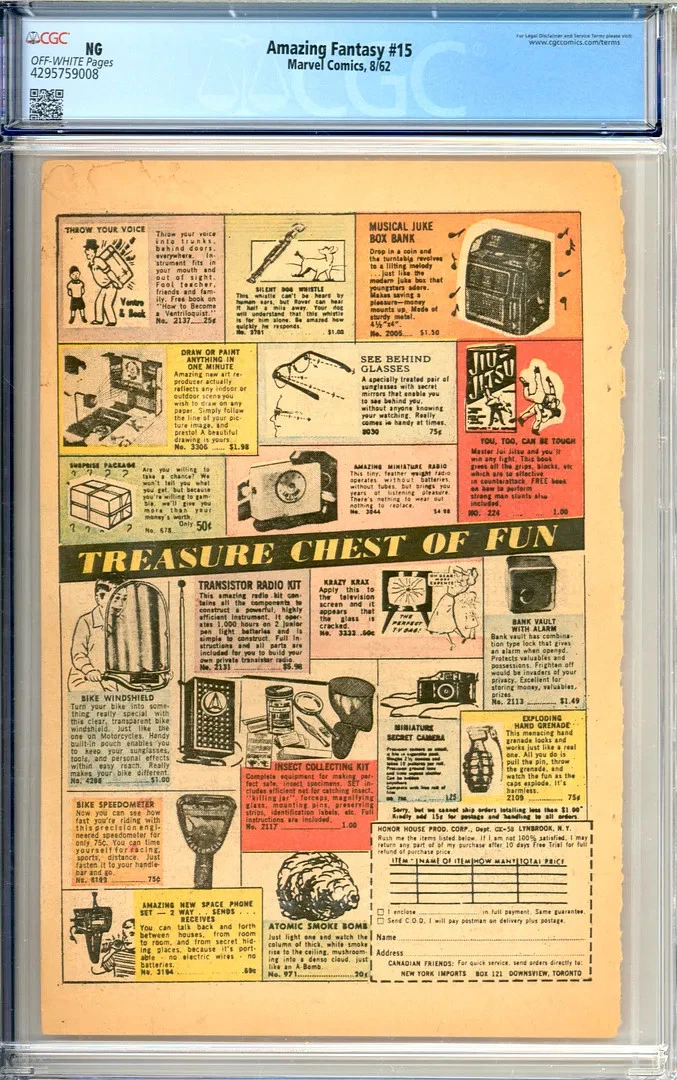
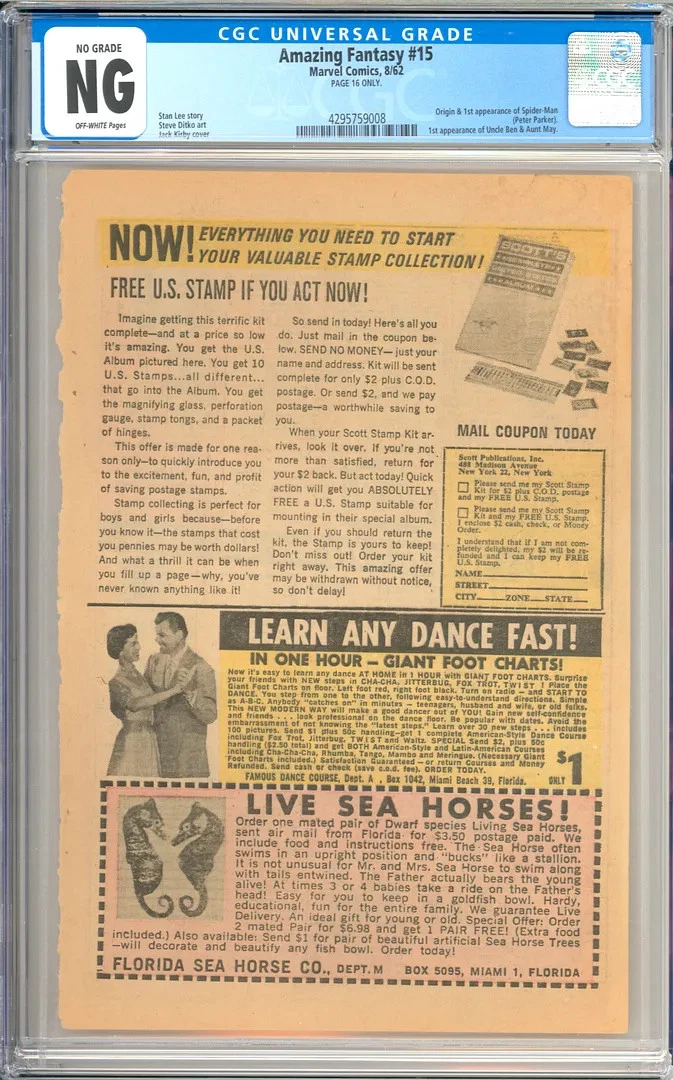
In a recent auction, a slabbed page from Amazing Fantasy 15, the first appearance of Spider-Man, sold for US$105.50. That’s a great sale for a page, but the thing is that it was an ad page. There’s no artwork: ads on the front, ads on the back. Not a bad return for something that highlighted live seahorses and learning how to dance on one side, and a full-page ad for novelty items.
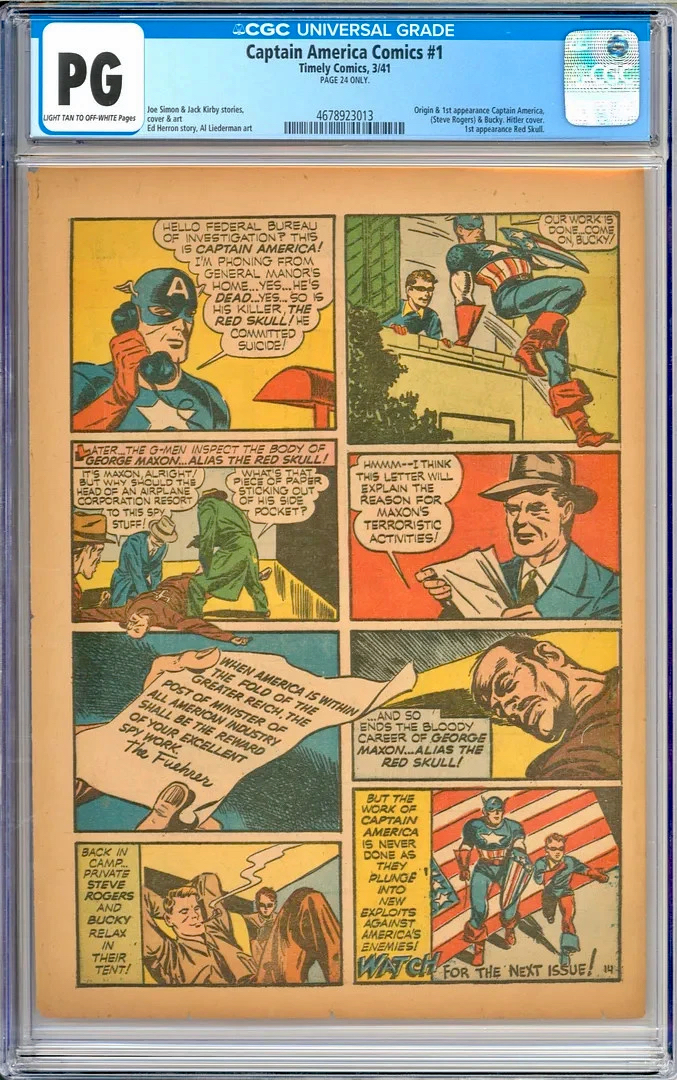
There were other individual pages from AF 15 for sale at this auction as well, but they included artwork and sold for more than the ad page. Expect to see slabbed individual pages, including covers, up for sale more often from incomplete key books or runs, such as Golden Age Captain America Comics (1941 to ’54).
Comics that aren’t slabbed, also known as raw, and are incomplete would most likely be graded as poor, valued at best at about five per cent of the mint price. Slabbing them would get the maximum return on a damaged book. But before slabbing a damaged book, always get a second opinion from a seasoned comic book collector or dealer.
•••
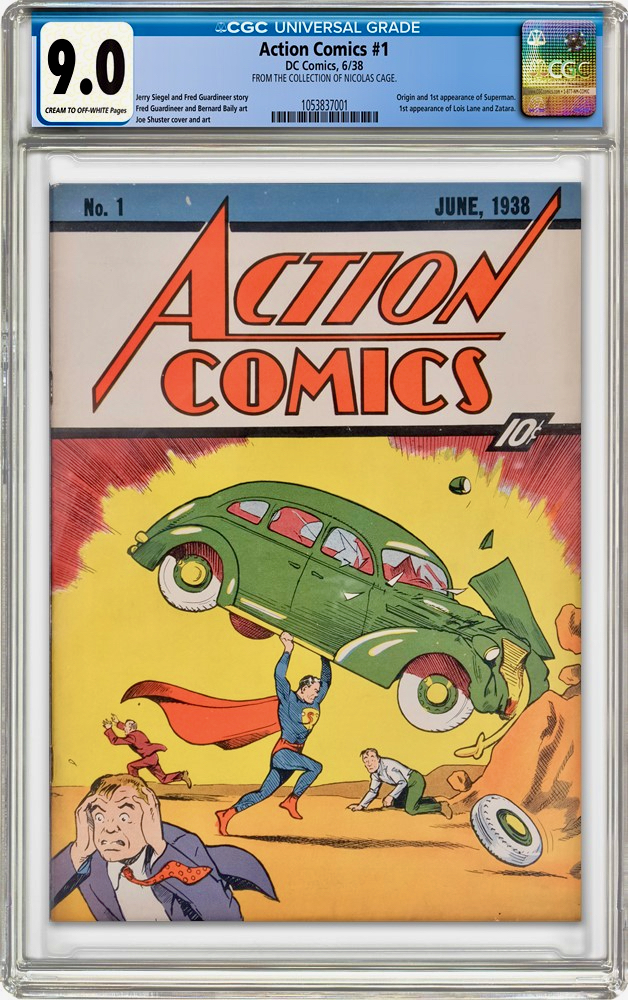
No sooner than a new sales record of US$9.2 was set by a 9.0 graded Superman 1 last November in a Heritage Auctions sale, Metropolis/Comic Connect of New York City was involved in the private sale of a 9.0 graded Action 1 in January for — drum roll, please — $15 million. It is now the highest-priced collectible, beating Mickey Mantle’s 1952 Topps card, which sold for $12.6 million in 2022.
The book, which had a print run of about 200,000, marks the first appearance of Superman in 1938. It is estimated that fewer than 100 currently exist. This book is THE key comic of the hobby. It was the first appearance of Superman and introduced the concept of a superhero with otherworldly superpowers.
This individual issue also has quite a history. Actor Nicolas Cage once owned the copy, one of two graded that high. It was stolen from his L.A. home in 2000 and was recovered 11 years later in San Fernando Valley following an abandoned storage locker auction.
The anonymous buyer then contacted Mark Balelo, he of Storage Wars fame, and in turn contacted Metropolis Comics in New York City. It was recognized as the stolen book, and an undercover police officer who attended a meeting with Balelo and the buyer recovered the holy grail and returned it to the actor.
Cage later auctioned the recovered book for $2.16 million.
Superman creators Jerry Siegel and Toronto-born Joe Shuster were paid a total of $130 for the rights to the character. It took several lawsuits over the decades for the duo and their families to get some of what they should have from DC Comics.