
By Ian Brimble
Most serious Canadian coin collectors are aware of exceptional rarities within the collecting community. One such rarity elicits excitement, curiosity and admiration amongst amateurs and advanced collectors alike: the 1936 dot penny produced early in 1937 is perhaps the most sought after and elusive prize for many Canadian coin collectors. At present, it is believed that only three examples of the 1936 dot penny exist, having survived to present day.
The circumstances that led to the eventual creation of the 1936 dot penny are a product of history directly related to the Royal Family, as are most Canadian coin and bill rarities. It all started with the death of King George V on January 20, 1936. As with the passing of any monarch, a great deal of preparation and transition is a direct result of this event. As we have seen with the passing of Queen Elizabeth II, the transition depicting King Charles on our currency has been a slow and somewhat drawnout process.
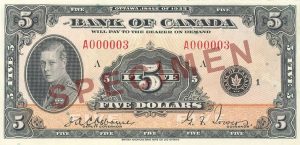
The passing of King George V was no different. Shortly following his death, the Royal Mint in London and the Royal Canadian Mint in Ottawa began preparations to depict his son, King Edward VIII, on Canadian coinage. King Edward VIII had only been pictured on Canadian Currency one previous time during the production of the 1935 issue of Canadian Paper money when his title was the Prince of Wales. (Image A)
 |
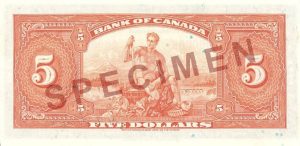 |
Image A: Prince of Wales (Future King Edward VIII) pictured on the 1935 French and English Banknote.
All of the preparations being made at the Royal Mint in London and the Royal Canadian Mint in Ottawa would be for not given the historically short reign of King Edward VIII. Edward, of course as history now knows, abdicated the throne after only 325 days. On December 11th 1936, Edward chose to abdicate the throne in order to marry Wallis Simpson; an American divorcee. This event naturally made headlines around the world and forced his brother Albert to take his place on the throne and become King George VI. This event would eventually lead to Queen Elizabeth II taking over the throne in 1952 and ultimately King Charles II, who reigns today.
Despite the historical intrigue and interest this now creates, at the time, it threw any preparations by the Royal Mint and the Royal Canadian Mint into complete turmoil. Ultimately,
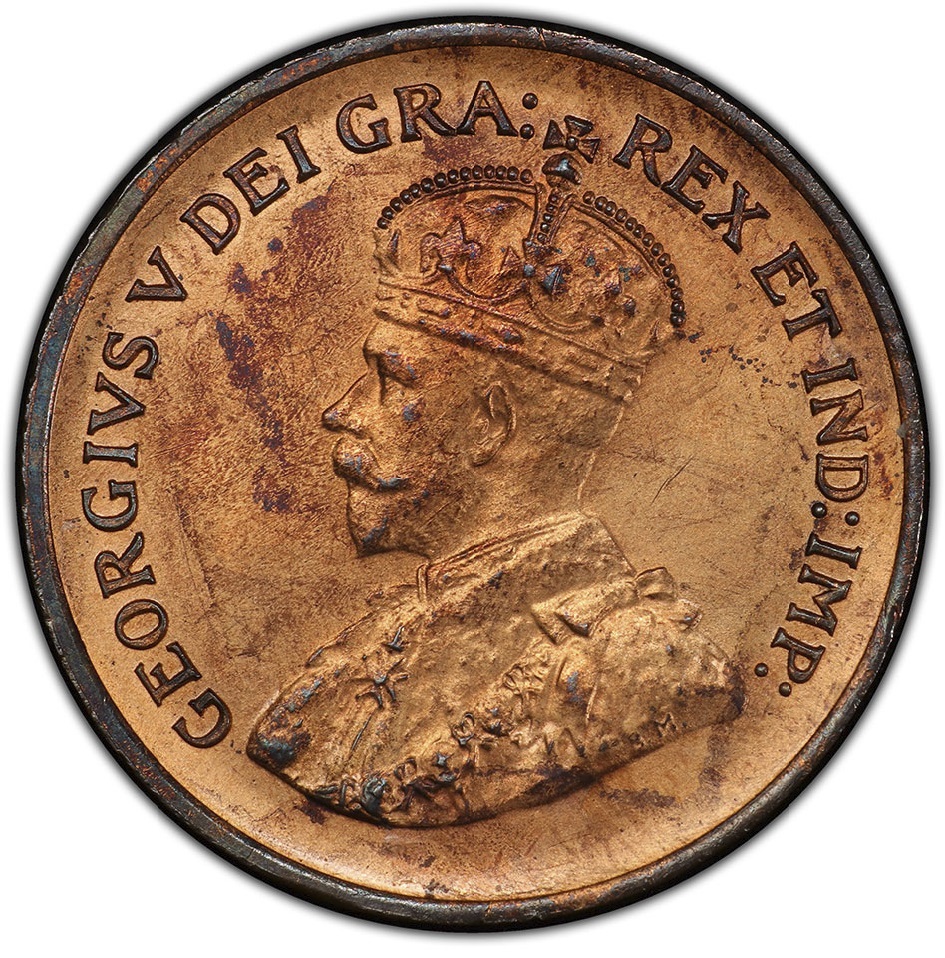
the Royal Canadian Mint determined that they would be unable to produce coins with the likeness of King George VI on them until later in 1937. Staff at the Royal Canadian Mint worried there would be a coin shortage and elected to produce coins dated 1936 with the late King George V pictured on them well into 1937. It was determined that they would distinguish between coins actually produced in 1936 from coins produced in 1937 with a small dot below the date between the “93” (see image B). This strategy was only undertaken for the 1 cent, 10 cent and 25 cent coins.
 |
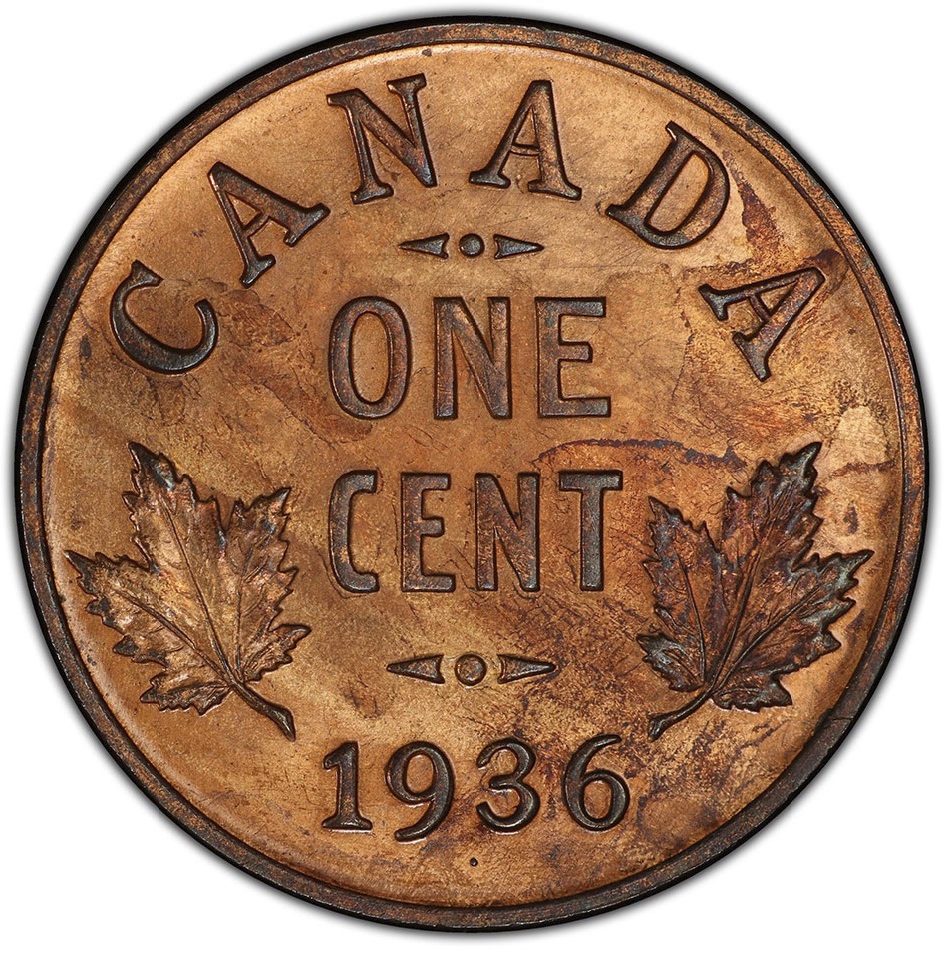 |
Image B: Canadian Specimen 1936 dot penny
The 25 cent coin featuring the dot is the least rare of the bunch and is somewhat common, although today is considered a semi-key date and is certainly not an exceptionally rare item. In average condition it may be worth between $50 and $200, with an excellent example fetching thousands of dollars. (See Image C)
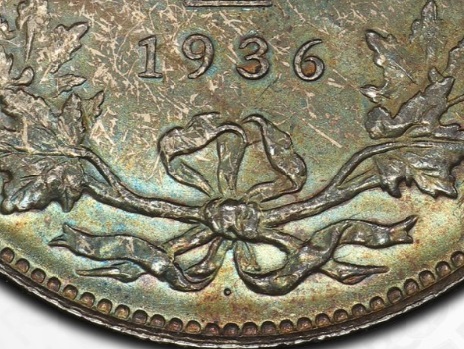
Image C: The 1936 dot Quarter
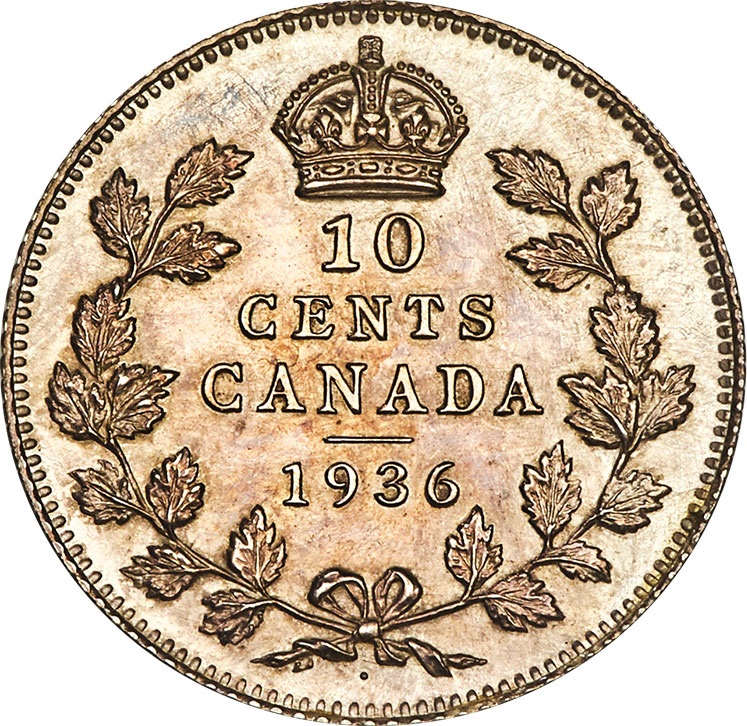
The 10 cent coin featuring the dot is quite rare indeed and it is believed that only four have survived to date with half of those housed in the Bank of Canada Currency Collection and the other two in the hands of private collectors. (See Image D)
 |
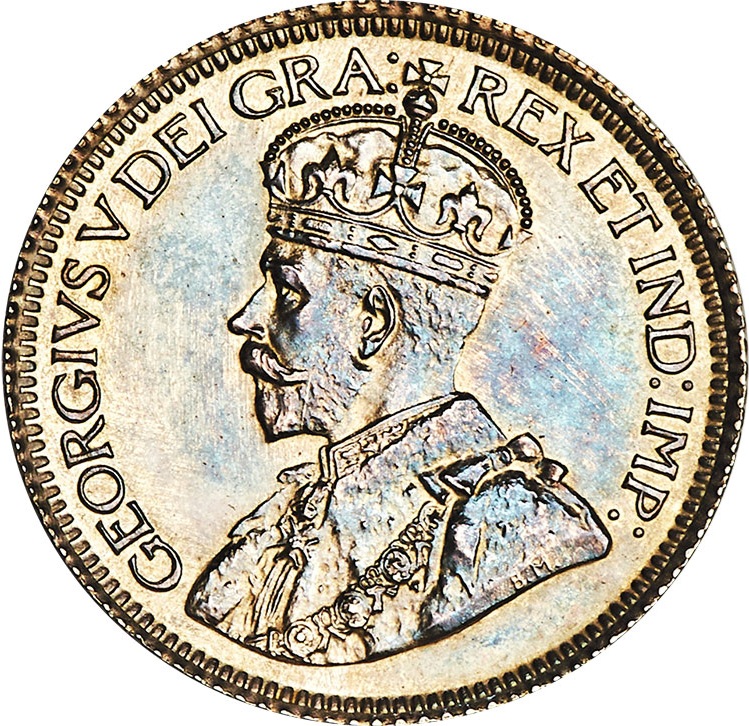 |
Image D: The 1936 dot 10 cent coin
Due to their rarity, the 10 cent dot and the 1 cent dot from 1936 are considered exceptional rarities. They have been collected over the years by the most famous Canadian Coin collectors, most notably, John Pittman who at one time owned all three 1936 dot pennies. The dot pennies have most recently been sold at auction in 2019 for $415,000 CAD, while the 1936 dot 10 cent sold for a record price during a 2010 sale, hitting $196,500 CAD.
Regardless of price, these items are unique historical pieces that reflect our interconnection with the United Kingdom. Should you have interest in high-end Canadian coins of exceptional rarity I would encourage you to visit the Bank of Canada currency collection in Ottawa. It is an excellent opportunity to see these items up close. For many, it is the only opportunity to see such a rare and storied item.
Hi i think i have a 1936 dot penny. I dont know what to do. I want to get it authenticated but i dont know where?
Contact Willow Coins – all the contact info is in the article.