By Mike Smith
For the past eight months or so I’ve been putting together a new handbook on the postcards by Toronto publisher Nerlich& Co. with my friend and co-author Robert Montpetit. Whether I’m co-authoring a handbook, or going solo, the goal is the same – have it ready to launchat the annual Toronto Postcard Club (TPC) Show in February. Over the years, launching a new handbook at the TPC Show has become as important to me as the Christmas season is to retailers.
So by the middle of January, I have to stop recording new additions and geteverything ready for the printer. More often than not, just when I think I can wrap things up, new arrivals show up at the 11th hour via email from my cross-Canada collector network. In this Wayback Times article then, I’m going to showcase some wonderful postcard treats that made it into my handbooks in the nick of time.
I might as well start with Nerlich & Co. Just when I thought the handbook was finished, a collector in Delta, BC sent me an image of a Toronto view card that I’d never seen before (see Figure 1). When I checked with other collectors in the TPC, I learned that the card wasn’t necessarily scarce butI’m convinced it’s unique to Nerlich & Co. And I’ve certainly catalogued a huge amount of Toronto view cards over the years.
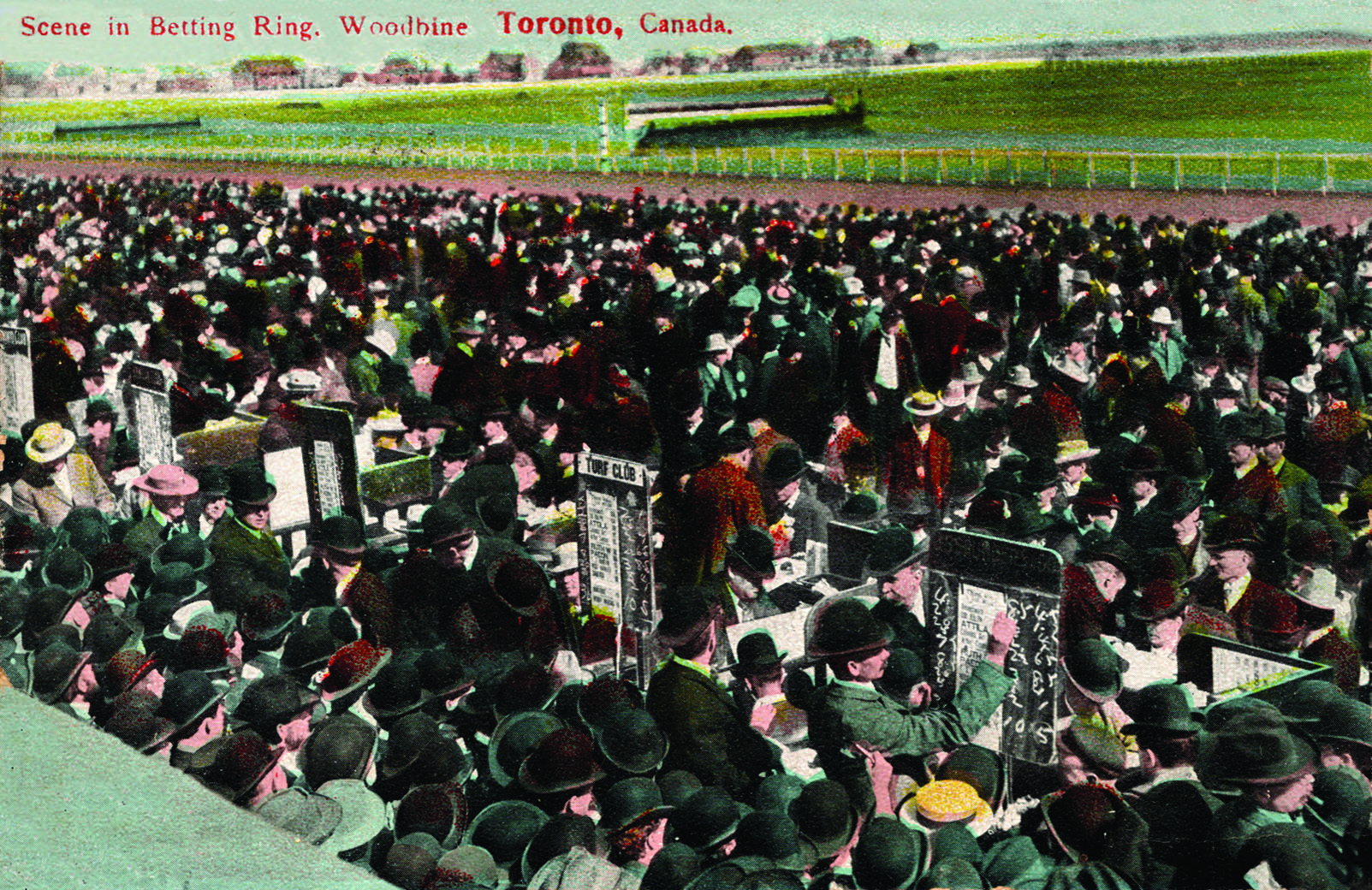
Woodbine Racetrack. This particular view appears to be unique to Nerlich & Co.
One of the pleasant surprises that came to light while putting together the T. J. Pugh postcard handbook last year was the number of mass-produced real photo postcards (RPPCs) that Pugh ordered from England’s Rotary Photo Co. Unlike locally-produced RPPCs, which were usually made by photographers in their studios, a few large firms such as Rotary Photo machine-printed them by the millions using a process originally developed in 1886 by Scotsman John Urie. Regardless of the process, all of Pugh’s mass-produced RPPCs have the same basic (rectangular) design except one of Amherstburg, Ontariothat turned up at the last minute (see Figure 2). This particular RPPC was not only a johnny-come-lately, it’s the only one with an oval view, a seashore motif and “Greetings From” as part of the caption.
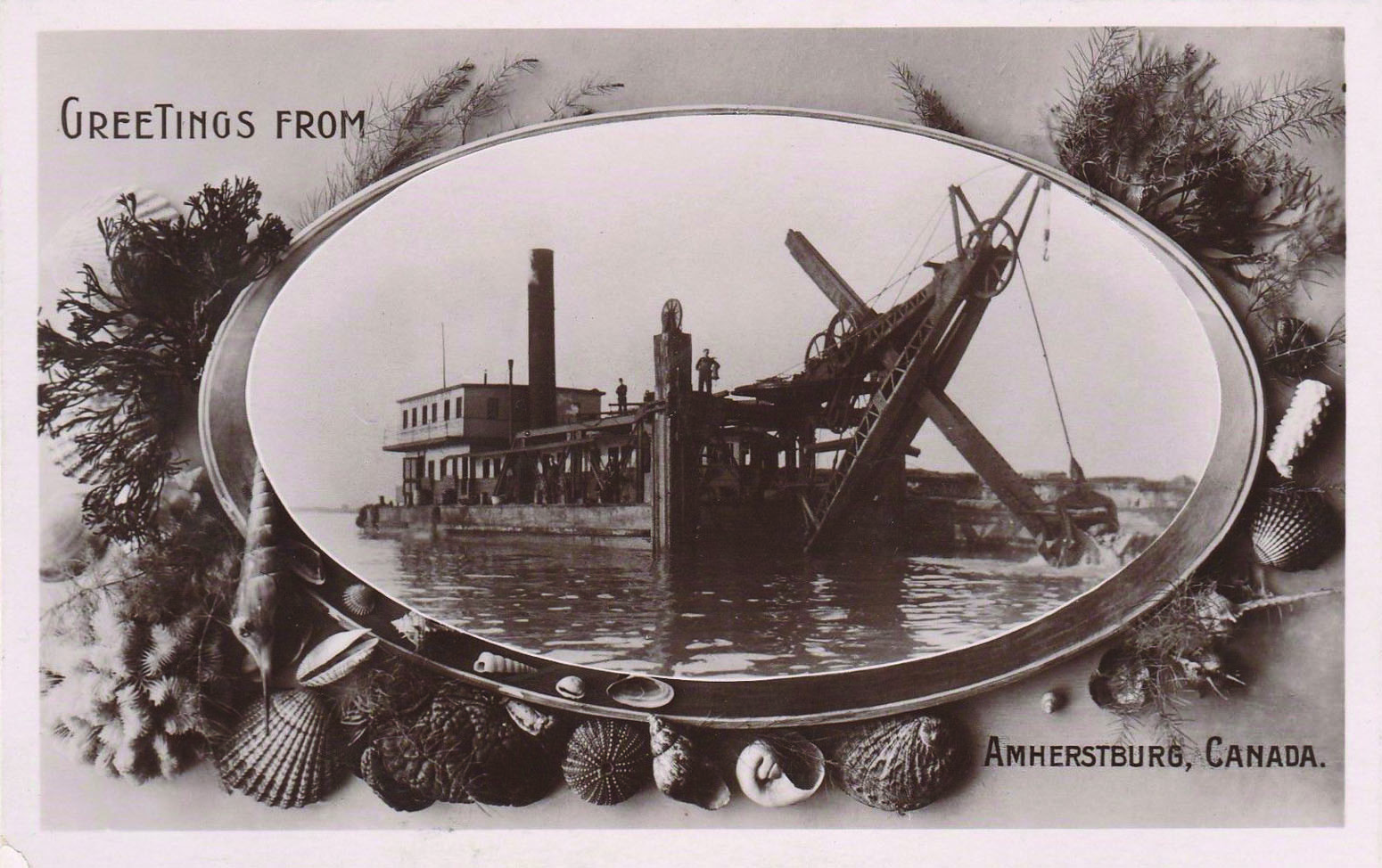
1912 Amherstburg, Ontario card is the only one like it.
Right before I converted my 2024 Rumsey & Co. handbook into a portable document format (PDF) file for transmission to my go-to printer in London, Ontario, I got a phone call from Hamilton dealer-collector Jon Soyka, former president of the Golden Horseshoe Post Card Club. Soyka and I have known each other for years and he’s a frequent contributor of postcards to my handbooks. He told me that he had a rather unusual Rumsey & Co. ad card that deserved to be catalogued. I told him to email meimages of the front and back and I’d squeeze it in somehow. Well, I was certainly surprised when the images arrived. What Soyka had was not a postcard or even a trade card (see Figure 3). My guess is that it was meant for the top of a Rumsey & Co. postcard rack in a store. Whatever its original purpose, I thought it was cool enough to find a place in one of the appendices at the back of the handbook. And the story gets even better. When Soyka came over to my book table at the 2024 TPC Show, he kindly gave me this display ad as a gift. Needless to say, it has pride of place in my Rumsey & Co. postcard album.
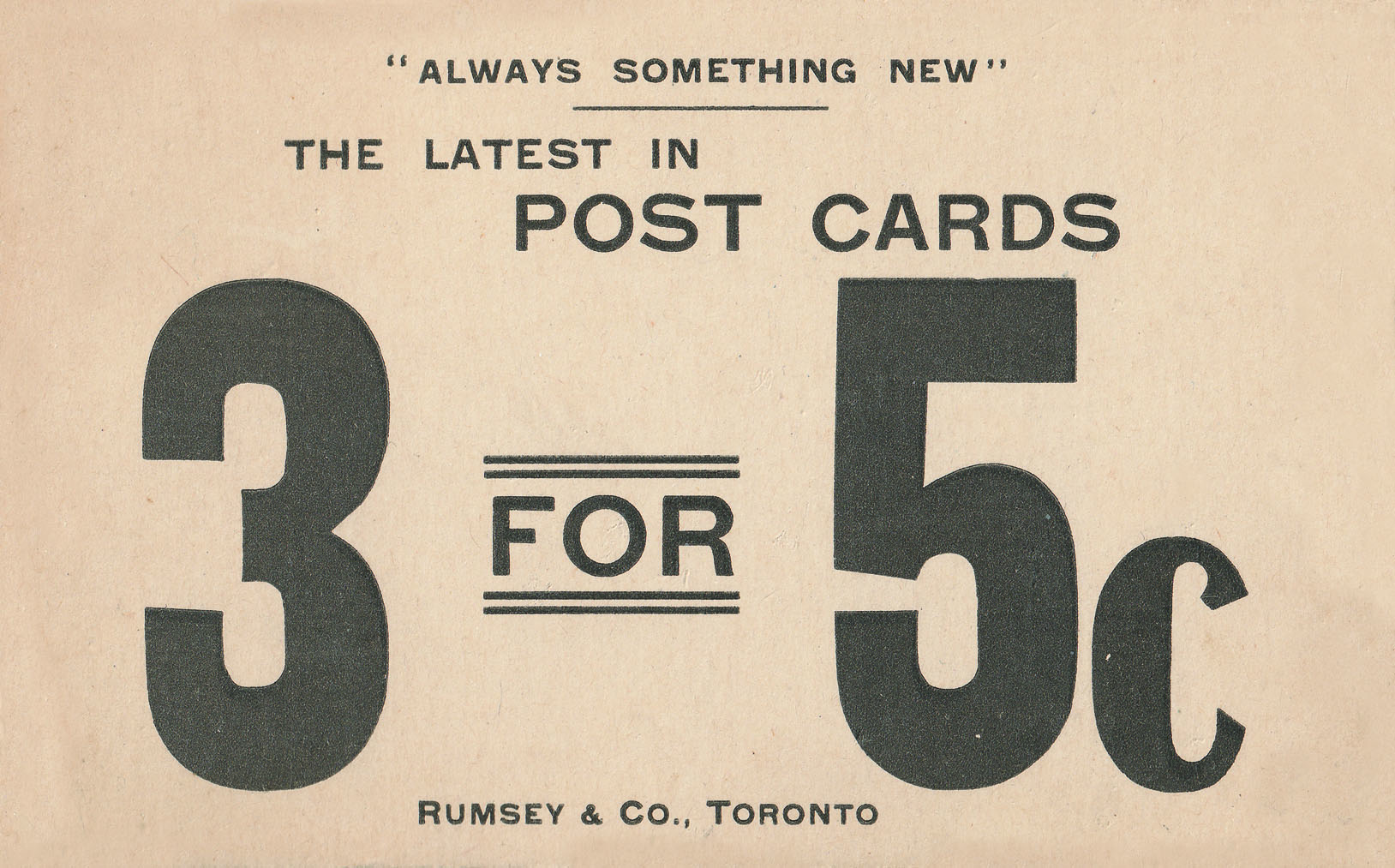
dealer-collector Jon Soyka.
Without a doubt, my intrepid editor Roger Miller has pulled more rabbits out of his hat when it comes to last minute postcard treats than any other collector I know. Miller has uncanny internet skills and regularly comes up with amazing postcard finds online. His help with my 2022 W. G. MacFarlane handbook is a great example. With time running out before I went to press, Miller found an ad in an online copy of the April 1908 issue of Canadian Druggistannouncing the release of a brand new MacFarlane fancy view card series. Incredibly, even with the MacFarlane handbook in its third edition by 2022, cards from this series had never been recorded.When I asked Miller to use all his “magic powers” to find me some examples to catalogue, he succeeded as usual (see Figure 4).
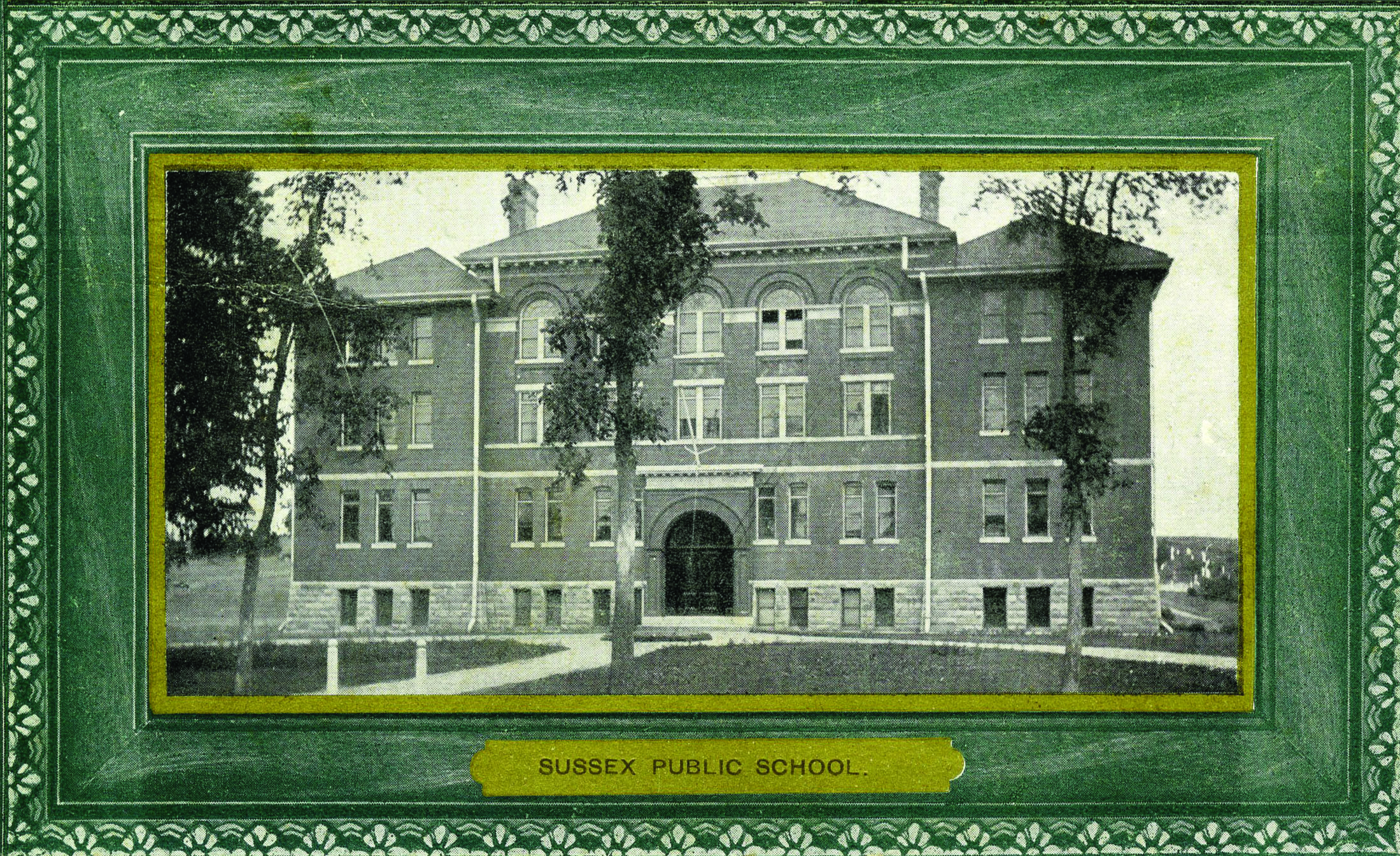
sourced by Roger Miller for the 2022 MacFarlane handbook.
Hope to see you at the 22 February 2026 TPC Show!