
By Ian Brimble
Every so often some coin news actually makes the global headlines. Such was the case in early November, 2025 when an interesting coin hoard came across the auction block of a London Numismatic Auction house. Known as the New Forest Hoard, it was discovered in 2020 by a couple doing some yardwork in their English garden. The anonymous couple was digging in their garden and noticed some disc-like structures within the soil. Upon closer inspection they realized they were old English coins. Eventually, with the help of an archeological dig, the couple unearthed 70 coins in total (1 silver and 69 gold); most from the Tudor era of the English monarchy.
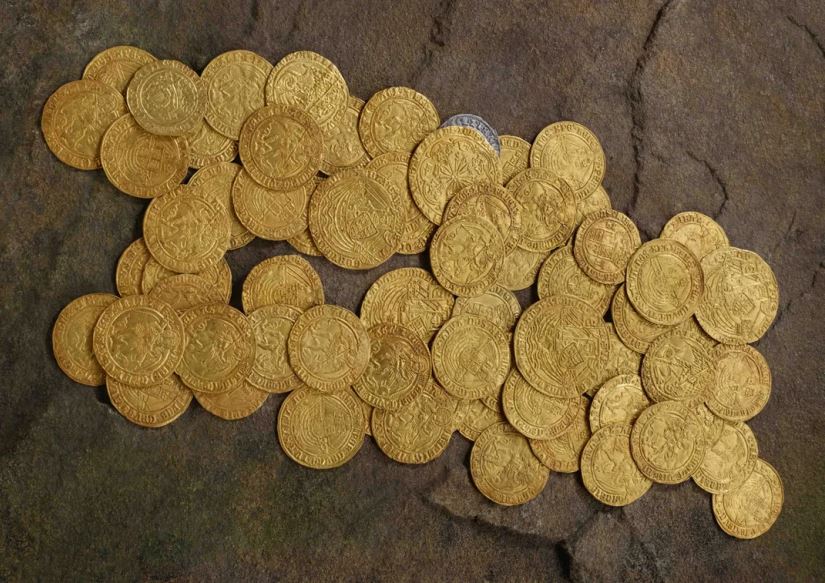
This is the most detailed and complete hoard of Tudor era coins to have ever been discovered and offered at auction. The hoard, upon discovery, went through the proper English process – it was reported to the British Museum and was eventually returned to the couple who discovered it. It is now recorded as treasure. The face value of this discovery is approximately 26 pounds which begs the question, what would that hoard have been worth to the person (group) that buried it? It is estimated by some that this hoard would have been significant enough at the time of burial to purchase a property in England. This is a significant detail in terms of determining who might have buried this hoard and for what purpose.
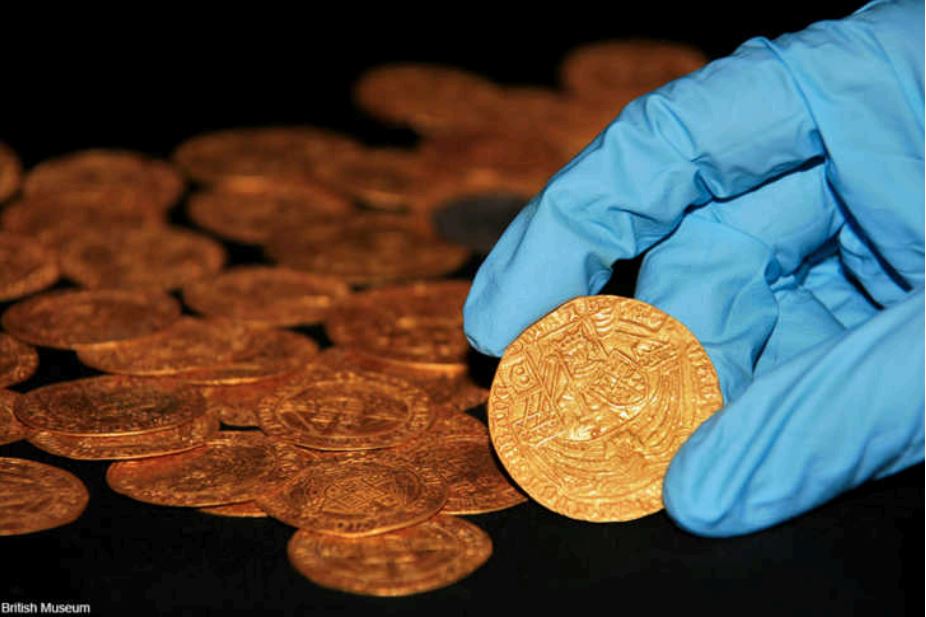
The Tudor monarchy began in 1485 (Henry VII) and Tudor monarchs reigned until the death of Queen Elizabeth I in 1603. This period in English history is marked with many significant events, perhaps most notably, the Reformation when King Henry VIII broke with Rome and declared himself the head of the Church of England. This event ultimately led to the dissolution of monasteries that were once Catholic. As one might imagine, this was a time of great upheaval in England and the result may have been the burial of the New Forest hoard. Some have theorized that it may have been local church officials responsible for the burial; seeking to protect assets from the tumult in their midst and protect monastery assets from being claimed by King Henry VIII. Whatever the reason for burial, the hoard boasts an impressive historical record by including coins that feature four Kings, two Queens and one Cardinal.
According to the Numismatic auctioneer David Guest, the discovery includes the following monarchs: Henry VI (1422 – 1461), Edward IV (1461-1470, 1471-1483), Henry VII (1485 – 1509), Henry VIII (1509 – 1547), Katherine of Aragon (wife of Henry VIII 1509-1533), Jane Seymour (wife of Henry VIII 1536-1537). One of the most interesting elements is that this hoard contains coins that feature the initials of Henry VIII’s spouses.

The coin above is intriguing as it represents the marriage between King Henry VIII and Katherine of Aragon who was his first wife. Ultimately, they divorced in 1533 mainly because she was not able to provide a male heir for the then King. Katherine was able to have a female child, who would go on to become Queen Mary I (1553-1558) better known as “Bloody Mary”. After Katherine of Aragon’s divorce from King Henry VIII he sought an annulment from the Catholic Church that was never granted. This was a significant element that contributed to the eventual Reformation in England.
Henry VIII’s second wife Anne Boleyn is not represented in any coinage from the hoard but interestingly she was executed by the king upon suspicion of adultery and treason. Many felt he was angry that she too did not produce male children. Prior to her execution Anne Boleyn had one child who would grow up to take the throne as Queen Elizabeth I (1558-1603) the longest reigning Tudor monarch.
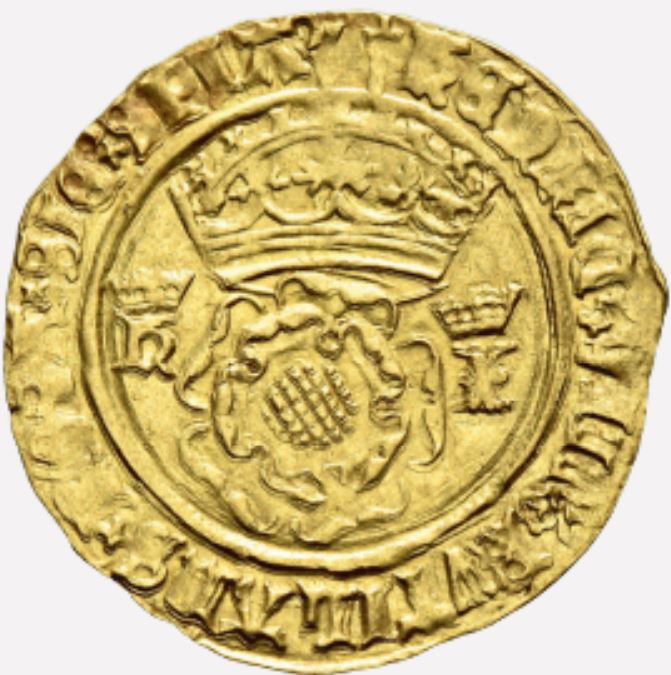
The coin above represented the marriage between Jane Semour and Henry VIII, Jane was Henry VIII’s third wife and she tragically died due to complications from the childbirth of the future King, Edward VI (1547- 1553). Henry XIII would go on to have three additional wives after the death of Jane Semour, yet, none would produce any heirs.
It is believed that based on the dates and remarkable condition of the coins found in the New Forest hoard that they were buried shortly after the most recently produced coin in 1537 (pictured above) featuring the double Tudor rose, an insignia that, at the time was meant to illustrate unity, but has since become synonymous with the Tudor dynasty. Regardless of the reason for burial, this hoard is an interesting part of English history, likely hidden as a direct
result of the considerable conflict and change from that time in the Tudor monarchy.
Source: David Guest Numismatics Auction 160: The New Forest Hoard and other Important Properties. Auction No. 160, 2025